For 70 years, India has been the most populous democracy in the world. With a huge population of 133.92 crores (based on 2017 data) and 560 million internet users, India is the second-largest online market in the world.
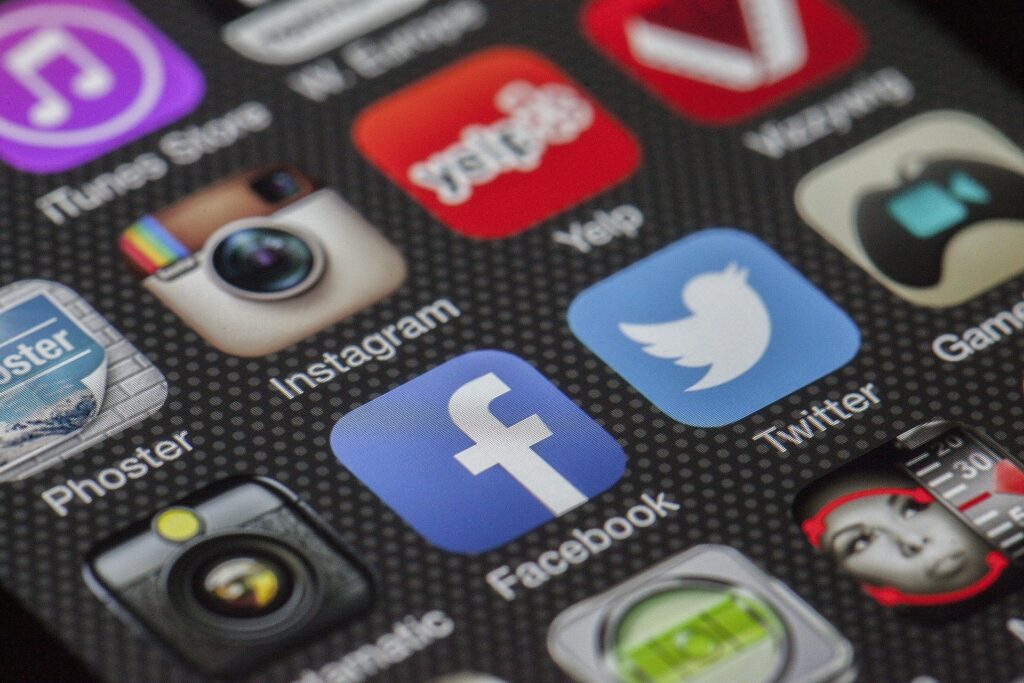
Social media is a very strong asset in today’s world that can either break or make an individual’s perspective. News on social media spreads like fire; and these days, social media is the biggest platform that people are using to circulate news, formulate opinions, and draft certain views about certain things. The internet has become far beyond just a chatting room and has come way beyond the “YouTube world” that it was a decade back.
For the past year or so, social media has become the most vital medium to share political news that we do not see otherwise, on news channels. Social media is a raw platform that does not care about always being politically right, but instead only focuses on the truth – well, mostly.
Democracy itself means rule of the people, hence, social media directly comes under the basic right that people shall have.
However, social media does not always have a positive impact on democracy and can be bad in some cases, too. In my article, I would like to scrutinize both the sides of the coin.
Beginning with the positive effects, social media is one of the largest, fastest, most efficient and the easiest available stand-point for any individual, especially the youth of the nation, to discuss the government, its policies, the manifestos, etc. to each other and spread awareness. Back in the 2010s, the only source of medium for such information were the news channels, which were not 100% authentic, but, since the rise of social media, genuine information has been tolling around and waking up people through facts and figures. A lot of statistics and particulars that are often not available on the television due to explicit reasons are found on social media platforms. Through this platform of discussion, more people are getting into political discussions and forming their own opinion, instead of following their kin’s, as they used to, earlier.
“Public sentiment is everything. With it, nothing can fail; against it, nothing can succeed. Whoever molds public sentiment goes deeper than he who enacts statutes, or pronounces judicial decisions”, Abraham Lincoln once said, very rightly. The social media platform has given everybody a voice and a chance to be heard, which was otherwise not possible through journalists, news reporters, etc., who are often called the ‘doorkeepers’ of information.
It has become a safe place for deliberation and debate on issues that need to be discussed more openly. Though at times, it does invite subjugation and bullying for having a certain belief, but, social media has definitely given birth to more supporters than adversaries in the democracy that we live in.
Social media’s effect does not only come into play in terms of the political school of thought but also plays a significant role in opening up about one’s sexuality, coming out of the closet, religions and ethnicities, and supporting people with specialized interests. With the increasing use of social media, it has started becoming a tool of solidarity and connection amongst people from all parts of the nation. It brings like-minded people together and promotes global friendships, too. This is one of the biggest unity factors that has come along with the power of special media and instils a ray of hope in everybody who thought they were denied their rights only because of their choices. It has given rise to a democracy within a democracy; the democracy to express and to accept.
Furthermore, social media does come with its fair share of negatives on the democracy as well. As discussed above, like-minded people come together through social media platforms and get connected. But this is not always a good thing to happen as at times it leads to group polarization. Group polarization is a phenomenon where like-minded people come together to put forward their opinion and end with an even more extreme version of their opinions altogether. This extreme vision about a topic many a time makes them very inclined towards their notions and makes them blind towards the other viewpoint of the topic. Such people tend to ignore the matter from someone else’s point of view completely and stick to their idea no matter if it is right or not. Their senses to judge right and wrong get suppressed under these extreme opinions which are often a threat to the democracy, as they ultimately do not care about other’s notions at all.
Many times, people create misleading opinions about the government, only based on the opinions they read on social media platforms. Their ability to think and decide is hindered and it often leads them in being misinformed and unaware about the authenticity of the knowledge gained.
False news on social media platforms spread faster than the correct ones and makes it difficult for the public to believe in what is right and what is wrong. This news can be about anything – the country, its people, the representatives, or even a particular person. We cannot always believe what we see on the internet but ironically (as you are reading it online, via the internet), people often do. Believing things about the country as a whole is something that is the ultimate misuse of social media on a democratic level.
To top it all, there is a major level of political harassment that goes on social media platforms. Not always, but a lot of times when something is posted against a particular political party, harassment is done both by the political party members and their supporters. People supporting different political parties often get into a heated argument with each other and not only use foul language but give threats as well. As democracy gives us the right to speech, such incidents surely take away that right from us.
The biggest example of saying that social media has its negative impacts on democracy is the 2016 US-Russia matter. The Internet Research Agency in Saint Petersburg, Russia interfered in the 2016 US elections and turned the entire election campaign in favor of the current US President, Donald Trump. The Russians created thousands of social media accounts pretending to be Americans in support of radical political groups, and promoted events in support of Trump, against the campaign of Hilary Clinton, boasting Trump’s candidacy through those fake accounts. This highly raised the political and social discord in the US.
As a conclusion, it is not 100% guaranteed that the positives of social media on democracy are going to outweigh the negatives, and vice versa. But the one thing that is guaranteed is the truth about the social media’s impact on democracy – that it intensifies human intent in both good and bad ways. At its best, the impact gives a voice to the people and a medium through which they can be heard. At its worst, it manipulates people’s perspective, spreads misinformation and gnaws the democracy. All we need to keep in mind is to research about things we see on the internet, learn about issues raised on social media platforms through facts and figures and talk about it to someone trustworthy who respects and understands your opinion, too, and not to believe everything and anything that we see on these platforms. We all should draft our opinions after rechecking the information’s legitimacy and authenticity and only then make it public and make the best use of social media in a democracy.